
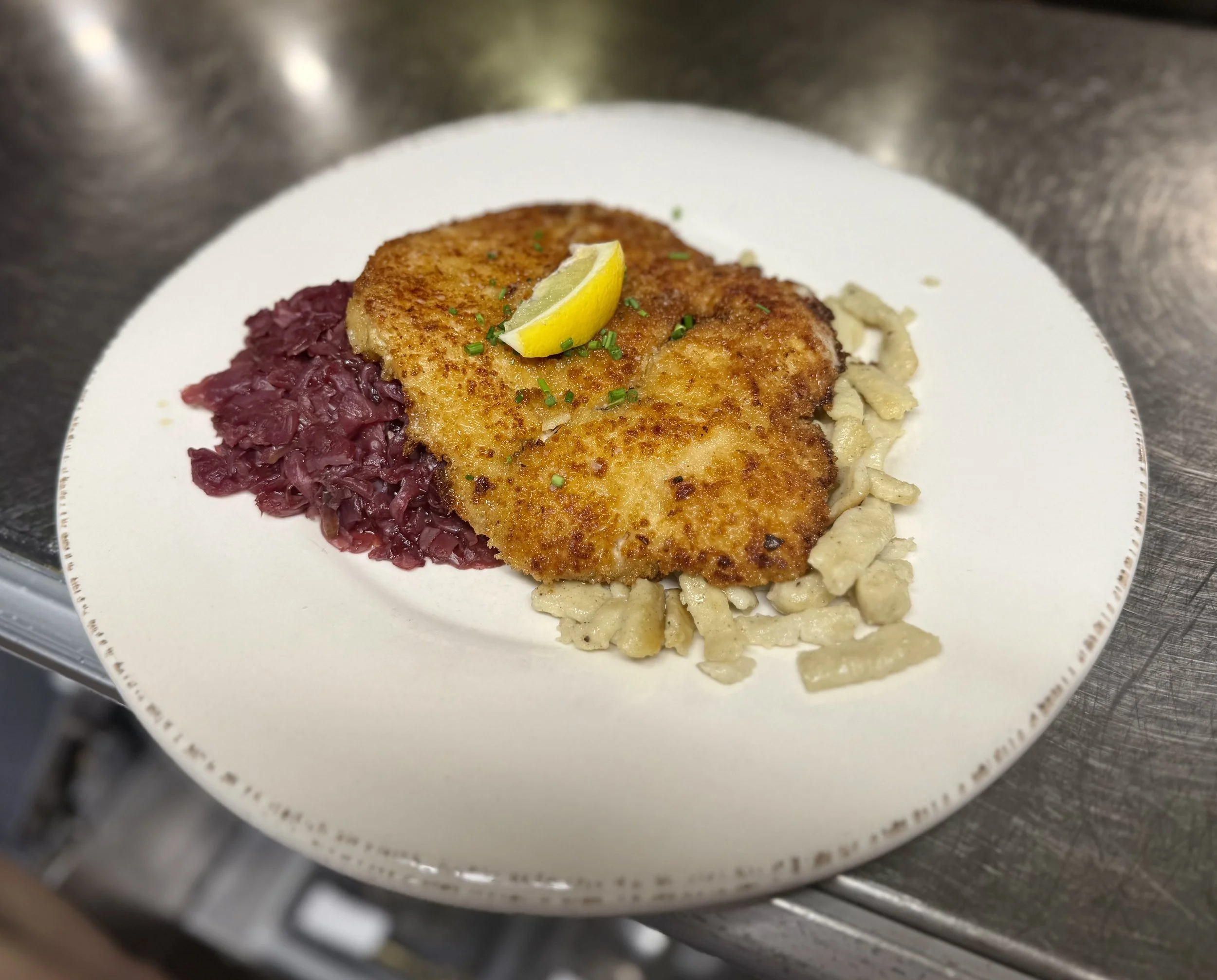
Schnitzel, Wiener, Jager, Rahm Explained
First, What Makes a Schnitzel a Schnitzel
The word comes from the German for "slice." The technique is the soul of the dish: the meat is pounded until it's barely a quarter-inch thick, passed through flour, egg, and fine breadcrumbs, then fried in generous fat while the pan is swirled and shaken. Done right, the breading souffles — it puffs away from the meat in delicate waves rather than gluing to it. That wavy, blistered crust is the signature of a kitchen that knows what it's doing.
Wiener Schnitzel: The Protected Original
"Wiener" means Viennese, and in Austria the term is protected by law: a true Wiener Schnitzel must be veal. Its origin story is deliciously contested — one legend says an Austrian field marshal brought the recipe home from Milan in 1857, inspired by Italy's cotoletta alla milanese, though food historians have poked holes in that tale. Either way, Vienna perfected it. It's served unadorned except for a lemon wedge, because the crust is the sauce. The everyday German cousin made with pork is properly called Schnitzel Wiener Art — "Vienna style."
Jägerschnitzel: The Hunter's Choice
"Jäger" means hunter, and Jägerschnitzel comes smothered in a rich brown mushroom sauce — the kind of thing a hunter might have made over a fire with foraged mushrooms after a long day in the forest. It's the coziest member of the schnitzel family, and in much of Germany it's the one locals order most.
Rahmschnitzel: Cream Country
"Rahm" means cream. This version wears a silky cream sauce, sometimes touched with white wine or paprika. It's southern German comfort food at its most luxurious — the schnitzel equivalent of a warm blanket.
The Great Side-Dish Debate
Spätzle or potatoes? Warm German potato salad or fries? Red cabbage or cucumber salad? There is no wrong answer, only regional loyalty. (The mushroom-sauce crowd tends toward spätzle, which was clearly designed by providence to catch Jäger sauce.)
Taste the Difference
Schnitzel is one of those dishes where authenticity can't hide. The pounding, the fresh breading, the hot fat, the timing — cut a corner anywhere and you get a sad breaded cutlet instead of the real thing. Come see how it's supposed to be done: our kitchen has been turning out proper schnitzel in Edgewater for over forty years.
Find your favorite on our menu — and settle the spätzle-versus-potato-salad debate for yourself. Prost!
The Real History of Oktoberfest
Why "Oktoberfest" Happens in September
Here's the trivia that wins bar bets: most of Oktoberfest actually takes place in September. As the festival grew, organizers stretched the dates longer and shifted them earlier into September to catch the warmer, longer late-summer days. The festival now begins in mid-September and always wraps up on the first Sunday of October, keeping its original autumn name intact.
The Wedding That Never Ended
On October 12, 1810, Crown Prince Ludwig of Bavaria married Princess Therese of Saxe-Hildburghausen. Rather than keeping the celebration behind palace walls, the royal family invited the citizens of Munich to party on the fields outside the city gates. The festival ran for five days and closed with a grand horse race in front of forty thousand cheering Bavarians.
The fields were named Theresienwiese — Therese's Meadow — in the bride's honor, and locals still simply call the festival "die Wiesn." The party was such a massive hit that Munich decided to run the horse races again the next year, sparking an annual tradition. Over the decades, agricultural fairs, bowling alleys, and beer stands sprouted on the lawn. Today, those original stands have evolved into colossal beer halls that seat up to ten thousand people under a single roof. Two centuries later, the wedding reception is still going. (The horse races themselves eventually faded away, revived only for the festival's grand anniversaries — but visitors to the nostalgic Oide Wiesn section can still step back in time among historic rides, traditional tents, and brass bands playing the way they did a century ago.)
Why "Oktoberfest" Happens in September
Here's the trivia that wins bar bets: most of Oktoberfest actually takes place in September. As the festival grew, organizers stretched the dates longer and shifted them earlier into September to catch the warmer, longer late-summer days. The festival now begins in mid-September and always wraps up on the first Sunday of October, keeping its original autumn name intact.
The festival officially begins at noon on the opening Saturday when Munich's mayor swings a heavy wooden mallet to tap the first keg, crying out "O'zapft is!" — Bavarian dialect for "It's tapped!" By unbreakable tradition, no beer can be served anywhere on the grounds until that first mug is drawn and handed directly to the Minister-President of Bavaria.
The Rules of the Wiesn
Oktoberfest beer is serious business, governed strictly by the Reinheitsgebot — the German Beer Purity Law of 1516. Only six historic Munich breweries (Augustiner, Hacker-Pschorr, Hofbräu, Löwenbräu, Paulaner, and Spaten) are permitted to pour on the fields. The beer itself has evolved over time; back in 1810, guests drank a dark, sweet Dunkel, which slowly transitioned into the copper-colored Märzen, and finally into today's modern Festbier — a golden lager that is a bit stronger, crisper, and maltier than everyday Helles.
This special brew is served exclusively in the Maßkrug, the heavy one-liter glass mug. A full Maß weighs over five pounds, and servers routinely carry ten at a time. Hauling over fifty pounds of sloshing glass through a roaring crowd means nobody is more quietly athletic than a Munich beer hall server. The culinary traditions are just as locked-in: Hendl (spit-roasted chicken), Schweinshaxe (crispy pork knuckle), giant pretzels, and Obatzda, the iconic, savory Bavarian beer-cheese spread.
Oktoberfest, Chesapeake Style
You don't need a flight to Munich to celebrate properly. Every fall, Old Stein Inn throws its own authentic Oktoberfest right here on Central Avenue. We bring the true spirit of die Wiesn to Maryland with live traditional German bands, our lush outdoor biergarten in full swing, hearty platters of Schweinshaxe and pretzels, and world-class German imports flowing from all ten taps. It's been a local tradition at the inn for decades.
Keep an eye on our events calendar for this year's Oktoberfest dates. The lederhosen are optional. The world-class beer and good times aren't.
Prost — and see you in the biergarten this fall!
German Wine 101
The German Wine Road
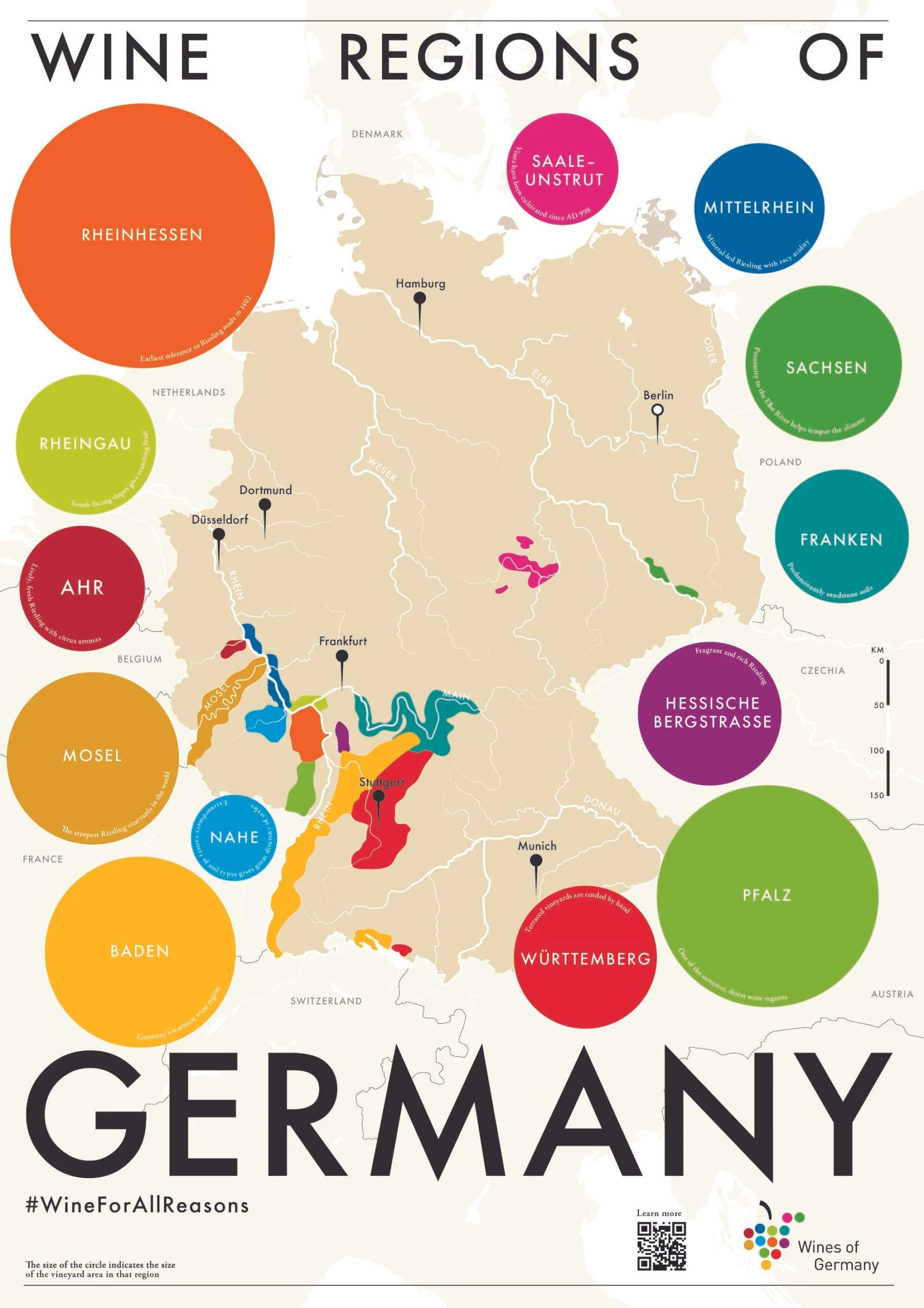
In the southwest corner of Germany, in the state of Rhineland-Palatinate, an 85-kilometer route winds through vineyards, almond orchards, and medieval villages. This is the Deutsche Weinstrasse — the German Wine Road — established in 1935 as the world's first designated wine route.
But the wine culture here goes back much further. Nearly 2,000 years ago, Roman legions realized that the sun-drenched slopes of the Haardt Mountains were perfect for viticulture — an excavated Roman winery near Bad Dürkheim still has its original grape-treading troughs, and the Romans were growing some of the same grape varieties cultivated there today. Protected by the Palatinate Forest, the Pfalz is Germany's sunniest corner, often called the "Tuscany of Germany." Fig trees, lemons, and almonds thrive in this Mediterranean microclimate, alongside some of the finest wine grapes in the world.
At the heart of the Weinstrasse sits Neustadt an der Weinstrasse — literally "new town on the wine road" — a city so devoted to wine that it hosts the German Wine Harvest Festival and crowns the German Wine Queen every autumn. Just up the road in Bad Dürkheim, locals celebrate the Wurstmarkt, officially the world's largest wine festival. If you visit, you won't find wine in delicate, stemmed crystal; it's poured into a Dubbeglas — a heavy, half-liter glass covered in round dimples, historically designed so a butcher's greasy hands wouldn't drop his drink.
This is where the Old Stein Inn's story begins. When our founders brought their traditions from Neustadt to Maryland, they brought a wine culture as rich and deeply rooted as the food.
Riesling, Rescued from Its Reputation
Riesling is Germany's noble grape, and the truth is that most German Riesling today is dry — crisp, mineral, and electric with acidity. The sugary styles that flooded American shelves in the 1970s (looking at you, Liebfraumilch) were cheap exports, not the true tradition.
While regions like the Mosel are famous for slate, the Pfalz features an incredibly complex matrix of limestone, loess, and red sandstone soils. This gives a dry Pfalz Riesling a rounder body, sunnier fruit flavors of green apple and lime, and a distinct, rich minerality. It may be the single most food-friendly white wine in the world, cutting through rich food the way a squeeze of fresh lemon does — which is exactly why it evolved alongside a cuisine of schnitzel, sausage, and pork roast.
The Rise of German Reds
While whites rule the river valleys, the Pfalz has quietly become a powerhouse for world-class red wines. Our best-kept secret is Spätburgunder — German Pinot Noir. Because of the region's warm microclimate, these cool-climate reds offer the elegance of a French Burgundy but with a bright, wild-berry acidity and earthy undertones. It is an absolutely beautiful match for duck, wild game, or a rich sauerbraten.
How to Read a German Wine Label
German labels look intimidating but follow a strict, logical system. A few words worth knowing:
Trocken means dry. If you see it, expect a crisp, clean finish, not sweetness.
Kabinett, Spätlese, and Auslese refer to the ripeness of the grapes at harvest, in ascending order. Riper grapes can make richer or sweeter wine — but a Spätlese trocken is a dry wine made from incredibly ripe, complex grapes, and it is often spectacular.
Pfalz, Mosel, and Rheingau are the regions. Pfalz wines tend toward fuller, riper, and sunnier profiles than their northern neighbors.
What to Pour Tonight
The classic pairings write themselves: dry Riesling with a crispy schnitzel, an off-dry Riesling with anything spiced or smoked, and a glass of Spätburgunder with your favorite hearty tavern dish.
Next time you're in, ask about the German bottles on our list. There's a wine on our shelves right now that grew up just a short bicycle ride from where our family's story started. Join us for dinner and taste the history of the Weinstrasse for yourself — or ask about custom wine selections for your next catered event. Prost!
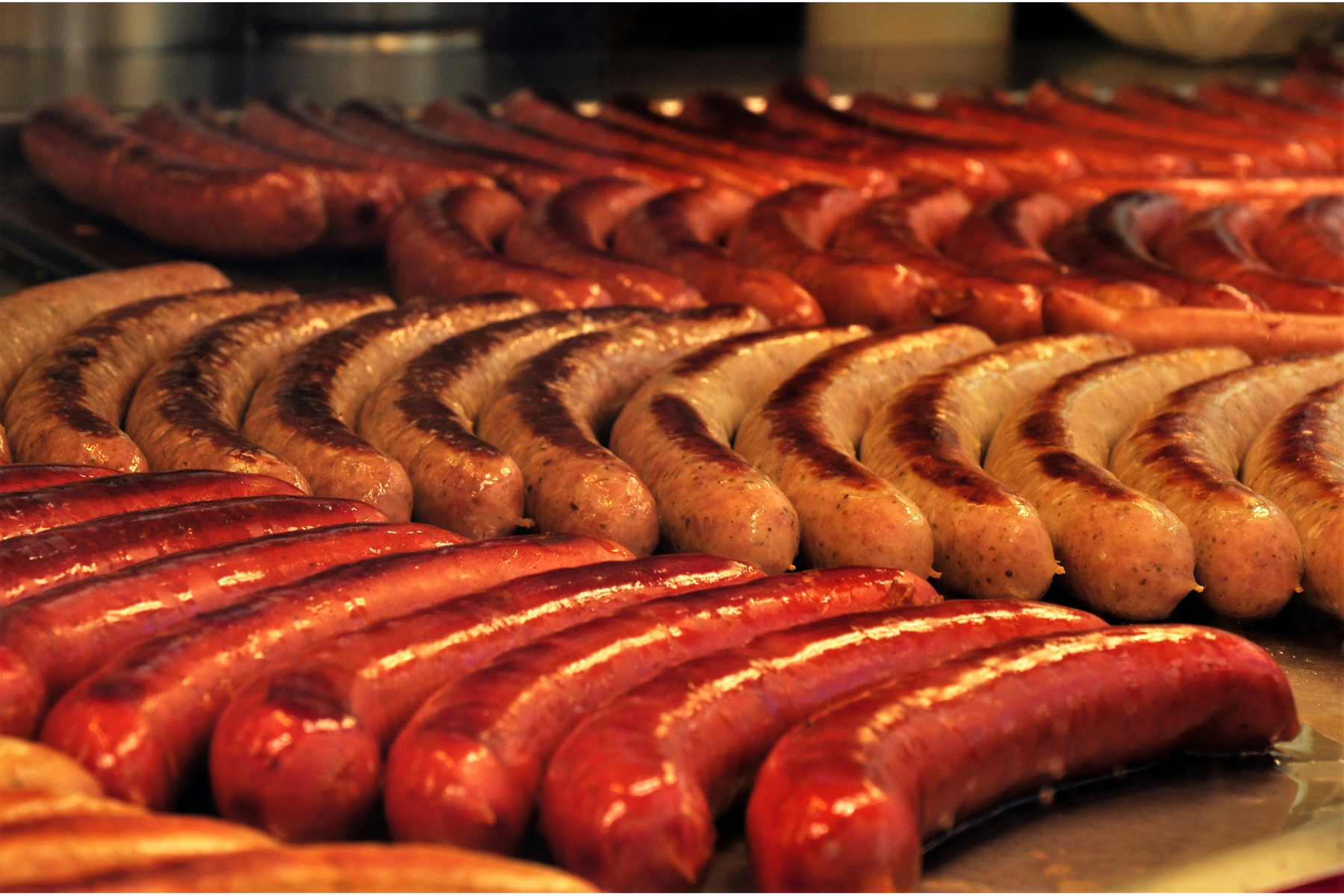
A Guide to German Sausages:
Bratwurst, Weisswurst, & Beyond
Bratwurst: The Ambassador
If you've had one German sausage, it's this one. "Brat" comes from an old German word for finely chopped meat, and a proper bratwurst — usually pork, sometimes veal — is seasoned with marjoram, nutmeg, or caraway depending on where it's made. Nuremberg's version is small as a finger and served by the half dozen; Thuringia's is long, smoky, and protected by European law like fine wine. Grilled until the casing snaps, it needs nothing more than mustard and a good roll.
Weisswurst: Munich's Morning Ritual
The white sausage of Bavaria is made from veal and pork back bacon, delicately seasoned with parsley, lemon, and cardamom. Tradition holds that weisswurst must never hear the church bells toll noon — it was made fresh each morning in the days before refrigeration and eaten before midday. Bavarians peel the casing, dip the sausage in sweet mustard, and pair it with a pretzel and a wheat beer. Yes, beer at breakfast. When in Munich.
Knockwurst: The Garlicky Snap
Shorter and plumper than a bratwurst, the knockwurst (or knackwurst) is all about garlic and that satisfying "knack" — the crack of the casing when you bite in, which is where the name comes from. It's smoked, beefy, and stands up beautifully to sauerkraut.
Baurenwurst: The Farmer’s Sausage
Traditional done in small batches in German homes, there is no standard recipe. The common version contains course ground pork and beef and often is smoked for a robust and smokey flavor.
Leberkäse: The Sausage That Isn't
The name translates to "liver cheese," and delightfully, the Bavarian version contains neither. It's a finely ground pork loaf, baked until it forms a crackly brown crust, then sliced thick and served on a roll or with a fried egg. Think of it as the most refined meatloaf you've ever tasted.
Why Sourcing Matters
Great sausage can't be faked. That's why we source ours from Schaller & Weber, the legendary German butcher founded in New York's old German neighborhood of Yorkville in 1937. They still make wurst the way it's made in the old country — proper cuts, natural casings, traditional spice blends. When our sausage platter hits your table with sauerkraut and warm potato salad, you're tasting recipes that crossed the Atlantic intact.
Ready to taste your way through the wurst world? Join us for dinner, or ask about our catering platters for your next gathering. Prost!
What is the Reinheitsgebot?
Only water, barley, and hops. Learn the story of the Reinheitsgebot, the 1516 Bavarian beer purity law that still shapes what's in your glass today.
Pick up almost any German beer and you'll find a proud phrase on the label: "Gebraut nach dem deutschen Reinheitsgebot" — brewed according to the German purity law. It's one of the oldest food regulations still in effect anywhere in the world, and the story behind it says a lot about why German beer tastes the way it does.
Germany’s 500-Year-Old Beer Purity law
Three Ingredients, One Duke
On April 23, 1516, Duke Wilhelm IV of Bavaria issued a decree in the town of Ingolstadt: beer could be made from only three ingredients — water, barley, and hops. (Yeast wasn't on the list because its role wasn't understood — brewers transferred it from batch to batch and saw it as part of the process rather than an ingredient. Once science caught up with fermentation in the 19th century, yeast was officially added as the fourth permitted ingredient.)
The Duke's motives were practical as much as pure. Bread was the staple food of the common people, and brewers competing for wheat and rye drove grain prices up. Restricting beer to barley protected the bread supply. The law also stamped out some genuinely alarming practices — medieval brewers had been known to toss in soot, ox bile, and even poisonous plants like henbane to imitate the effects of stronger beer.
Why It Still Matters in Your Glass
Critics sometimes call the Reinheitsgebot limiting — no fruit, no spices, no shortcuts. But German brewers turned constraint into craft. When you can only use four ingredients, mastery of those ingredients becomes everything: the mineral character of the water, the malting of the barley, the variety of the hops, the behavior of the yeast. The astonishing range of German beer styles — crisp Pilsner, bready Helles, roasty Dunkel, banana-and-clove Hefeweizen (wheat beers got their own carve-out) — all comes from endless refinement within those boundaries.
It's the same philosophy behind great German cooking: simple ingredients, treated with respect, executed without compromise.
Modern Law
Reinheitsgebot is not a legal requirement for all beers sold in Germany, as of 1987 a EU ruling forced Germany to allow imported beers. In 1993, it was officially replaced by the Provisional German Beer Law as a temporary measure and again was replaced in 2005 by Bierverordnung, which allows for more ingredients in beers and put Germany in compliance with the EU industry standards for food and beverages.
Taste the Law in Action
Our ten German taps at Old Stein Inn pour beers brewed in that tradition, and our full list of bottled beers reads like a tour of German brewing history. Ask your server or bartender what's pouring — there's a good chance the recipe in your glass would have satisfied a Bavarian duke five centuries ago.
Come explore the taps at our 22-foot bar, or grab a liter in the biergarten. Prost!
The History of the German Biergarten
Where did biergartens come from? Discover the 200-year history of Germany's beloved beer gardens — and where to find an authentic one near Annapolis.
There's a reason sitting in a biergarten feels different from sitting on any other restaurant patio. The long communal tables, the shade trees, the unhurried pace — none of it is accidental. The biergarten is one of Germany's great social inventions, and its story starts, of all places, underground.
It Began with Beer Cellars
In the early 1800s, Bavarian brewers faced a practical problem: lager beer needs cool temperatures to ferment, and summer in Munich made brewing nearly impossible. Their solution was to dig deep cellars along the banks of the Isar River, pack them with ice, and store beer there through the warm months.
To keep the cellars even cooler, brewers planted chestnut trees overhead. Chestnuts have broad leaves and shallow roots — perfect shade without disturbing the cellars below. Before long, brewers realized they were sitting on something valuable: cold beer, in summer, under beautiful shade trees. They set out simple tables and started selling directly to the public.
Munich's innkeepers were furious about the competition, so King Maximilian I struck a famous compromise in 1812: the beer cellars could serve beer (and bread), but no other food. Customers brought their own. To this day, in a traditional Bavarian biergarten, you're welcome to bring your own picnic to the self-service areas — a tradition that survives from a 200-year-old royal decree.
More Than a Place to Drink
What makes a biergarten a biergarten isn't really the beer. It's the Gemütlichkeit — that famously untranslatable German word for warmth, belonging, and good cheer. Strangers share tables. Families bring children. Nobody rushes you. The biergarten became the living room of Bavarian life, a place where a banker and a bricklayer could split a bench and a liter of Helles.
That spirit crossed the Atlantic with German immigrants in the 19th century, and beer gardens flourished in American cities from Milwaukee to Baltimore before Prohibition wiped most of them out. Their revival over the past two decades has been one of the happiest trends in American dining.
Our Corner of Bavaria in Edgewater
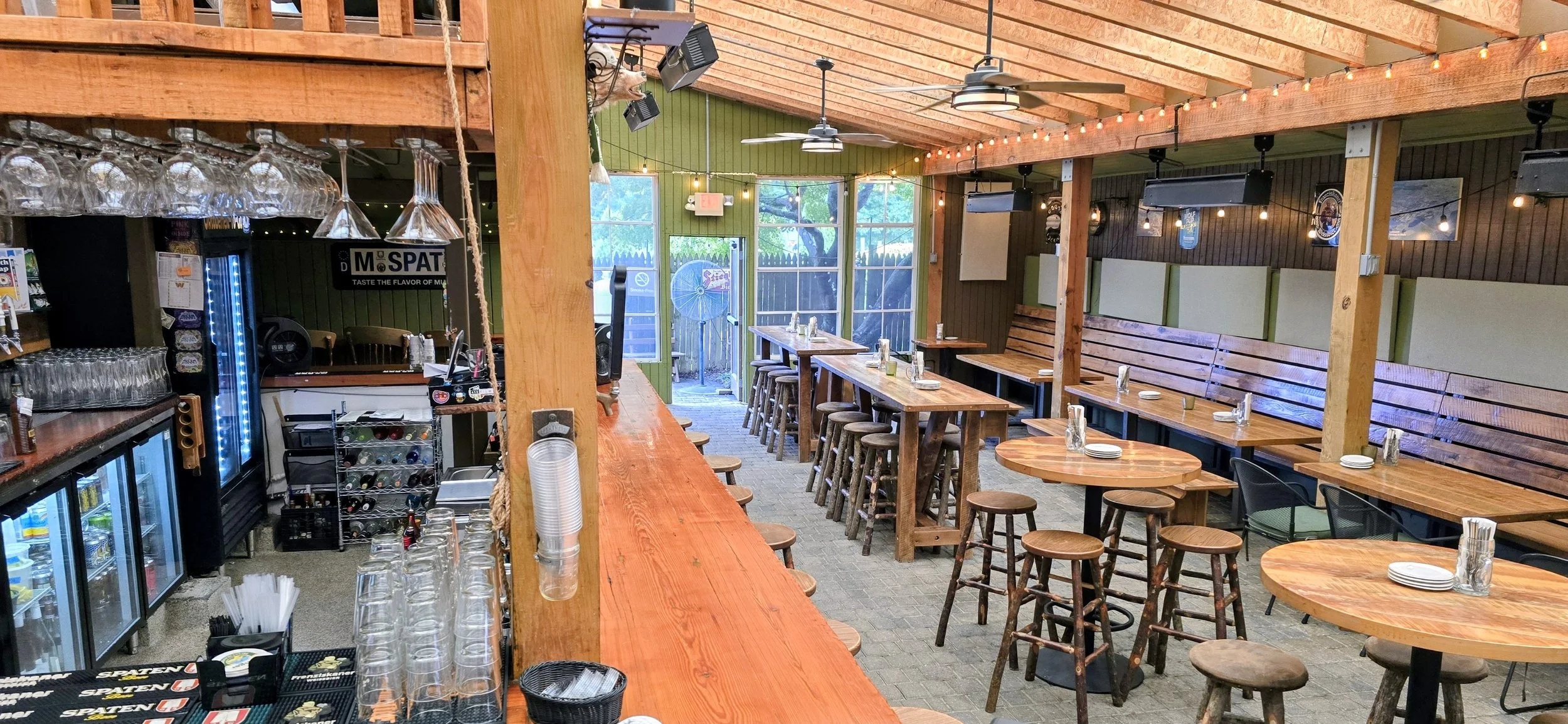
When you settle into our 150-seat biergarten here at Old Stein Inn, you're taking part in that tradition. We pour from ten German taps, the pretzels come out warm, family and friends celebrate, and Friday nights alive with music that drifts through the garden the way it has in Munich for two centuries. Our family's roots trace back to Neustadt an der Weinstrasse, and building a true biergarten — not just a patio with beer — has always been part of honoring where we came from.
The chestnut trees of Munich are a long way from the Chesapeake, but the feeling underneath them travels just fine.
Planning a visit? Check our events calendar for live music Fridays and trivia Wednesdays or reach out about hosting your next celebration in the biergarten. Prost!